Probably the most well known application for tungsten alloys is the aerospace industry, where weights and counterweights are often required to be housed in restricted areas. With significant reductions in size possible, this in turn, leads to greater control of weight distribution. These components can increase the sensitivity of control mechanisms and keep the forces required to operate flight controls within acceptable limits.
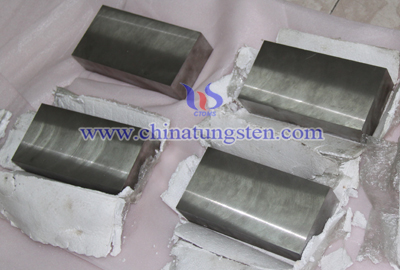
Tungsten Alloy Trim Weights
Vibrations in the dynamic components of aircraft engines and propeller systems are highly undesirable. Vibration, caused by mass imbalance of externally rotating components, can be reduced or eliminated by using mass trim weights. Additionally, counterweights are incorporated into the pitch control systems of many propeller designs as a failsafe mechanism. During flight the propellers are kept at the correct angle by hydraulic pressure.
Should this system fail the weights counter the blades' tendency towards fine pitch and ensure that over speeding is prevented. Flight control surfaces, such as elevators, rudders and ailerons, often incorporate counterbalances to optimize performance. Tungsten alloys offer designers several advantages over conventional balance materials such as lead or steel. The higher density of the alloys permits smaller components to be used, reducing overall system weight. Unlike lead, which can exhibit creep at ambient temperatures, these alloys are stable and so may be used in mechanically stressed positions without the need for additional fabrication and encasement.
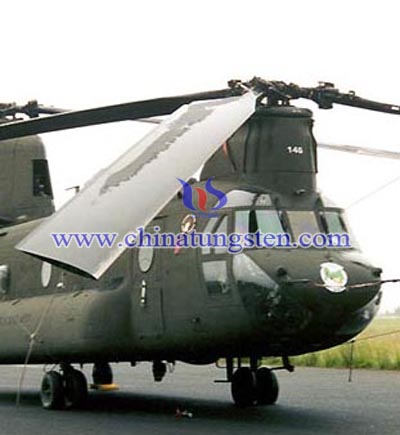
Tungsten Alloy for Rotor Blade
| Other aerospace applications of tungsten alloys include mass balances in satellites and helicopter rotor blades and in gyroscopic controls for missiles and avionics. In contrast to their vibration damping applications, these materials are also utilized, in the cockpit, to exaggerate the required vibrations in stall-warning shakers for control columns. Similarly, the advent of fly-by-wire controls has introduced small quantities of tungsten alloys into flight control joysticks, in order to increase stick inertia and therefore reintroduce some of the “feel” that is present in traditional controls, which use mechanical linkages to the elevators and ailerons. |
 |
In addition to their incorporation as weights and balances, tungsten alloys contribute to aircraft fabrication and repair operations. To deaden the vibration caused by rivet guns, bucking bars (“riveting dollies” or “hand anvils”) are used to absorb the force. The vibration can result in damage to nerves, muscles and bones in operators' hands causing Carpel Tunnel Syndrome (Vibration White Finger). Many aerospace companies now reduce the effects of vibration by using tungsten alloy bucking bars.
Ever more rapid long-distance transport of passengers and goods with a concurrent reduction of fuel consumption and emission of pollutants is one of the main demands of today's aerospace industry. Products and components made of Tungsten Alloy high performance materials are key elements for future generations of civil supersonic and wide-bodied airplanes, hypersonic aircraft and high performance planes. High-temperature materials facilitate pioneering innovations in the area of propulsion systems, such as aircraft turbines and rocket propulsion, as well as hot outer skin structures of hypersonic aircraft.
Advanced materials for the reduction of fuel consumption:
Increasing the gas inlet temperature in gas turbines significantly contributes to more energy efficiency in aerospace. Materials have to meet high demands such as hot-gas corrosion resistance, low thermal expansion, high creep resistance and superior fatigue properties.
Due to their excellent mechanical and physical properties, Chinatungsten Online's refractory metals are most suitable for components such as combustion and propulsion nozzles for satellites and other spacecraft. If you get any enquiry about the tungsten related products used in aerospace industry, please feel free to contact us at sales@chinatungsten.com or call: 0086 592 512 9696, 0086 592 512 9595.
|