
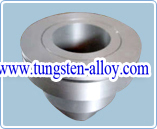
 Tungsten glass industry is based on quartz. Quartz is produced in special high-temperature furnaces with very high melting temperatures (approx. 2000°C). The heart of such a furnace in glass industry consists of a melting crucible. Tungsten industry is continually filled with quartz sand and heated to melting temperature.
Tungsten alloy is widely as a constituent in the glass industry alloys of other metals, since it generally enhances high-temperature strength. Several types of tool steels and some stainless steels contain tungsten. Heat-resistant alloys, also termed super alloys, are nickel-, cobalt-, or iron-based systems containing varying amounts (typically 1.5–25 wt %) of tungsten. You can see tungsten glass industry is a high-temperature resistance material.
Except glass industry, unalloyed tungsten (25% of tungsten consumption) in the form of wire is used as filaments in incandescent and fluorescent lamps, and as heating elements for furnaces and heaters. Because of its high electron emissivity, thorium-doped ( throated) tungsten wire is employed for direct cathode electronic filaments. Tungsten rods find use as lamp filament supports, electrical contacts, and electrodes for arc lamps.
Tungsten compounds (5% of tungsten consumption) have a number of industrial applications. Calcium and magnesium tungsten are used as phosphors in fluorescent lights and television tubes. Sodium tungsten is employed in the fireproofing of fabrics and in the preparation of tungsten-containing dyes and pigments used in paints tungsten glass industry and printing inks. Compounds glass industry such as WO3 and WS2 are catalysts for various chemical processes in the petroleum industry. Both WS2 and WSe2 are dry, high-temperature lubricants. Other applications of tungsten compounds have been made in the tungsten industry, ceramics, and tanning industries.
In the past, platinum tungsten alloys have been applied in wear resistant situations nib tips for fountain pens or for gram-phone needles. Platinum tungsten alloys also featured as electrical contact materials, but do not appear to be used currently for this.
The general nature of the platinum tungsten liquids and solidus relationships were first determined many years ago and are shown in the upper part of Figure I. At the higher temperatures, the phase diagram is of the simple paratactic type with the paratactic at about 2460OC.
Platinum tungsten are used very widely in the glass industry because of their outstanding physical and chemical properties. These materials are excellently suited to the extremely complex service conditions, because of their high mechanical strength at high temperatures under simultaneous corrosive conditions of tungsten glass industry. Particularly advantageous properties of the platinum tungsten materials for application in the are:
 High melting points (above 1650°C)
very good oxidation resistance
good corrosion resistance against aggressive tungsten glass industry melts, gases and salts
negligible contamination of the tunstgen industry melts because of the extremely low solubility of platinum tungsten in the melt and the good corrosion stability
minimal pick up of foreign substances from the product melt
high mechanical strength at extremely high temperatures and good ductility
Good formability and weldability
good electrical conductivity (advantageous for direct heating)
Amenability to complete recycling in it.
High melting points (above 1650°C)
very good oxidation resistance
good corrosion resistance against aggressive tungsten glass industry melts, gases and salts
negligible contamination of the tunstgen industry melts because of the extremely low solubility of platinum tungsten in the melt and the good corrosion stability
minimal pick up of foreign substances from the product melt
high mechanical strength at extremely high temperatures and good ductility
Good formability and weldability
good electrical conductivity (advantageous for direct heating)
Amenability to complete recycling in it.
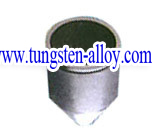
Typical applications of platinum tungsten in the glass industry are feeder systems (homogenization cells, stirrers, plunger cells, plungers, feeder tubes and outlet orifices), bubbler tubes, drain bushings, tank linings, melting crucibles, protective thermocouple thimbles, laboratory equipment, electrodes and glass fiber bushings. By using platinum tungsten, the service lives of plant components can be greatly increased, and both the high quality of the glass melt and the achievement of precise dimensional and weight tolerances in the products can be guaranteed much more readily than when refractory tungsten industry components are used.
The properties which are of greatest significance for the application of platinum tungsten in the tungsten glass industry include the stress-rupture strength, the behavior during creep and rupture, the weldability and the resistance to corrosion. We can provide various components used in glass industry.
Chinatungsten Online can offer tungsten related products used in tungsten glass industry, if you have any enquiry or purchase plan, please feel free to contact sales@chinatungsten.com or telephone: 00 86 592 512 9696.